
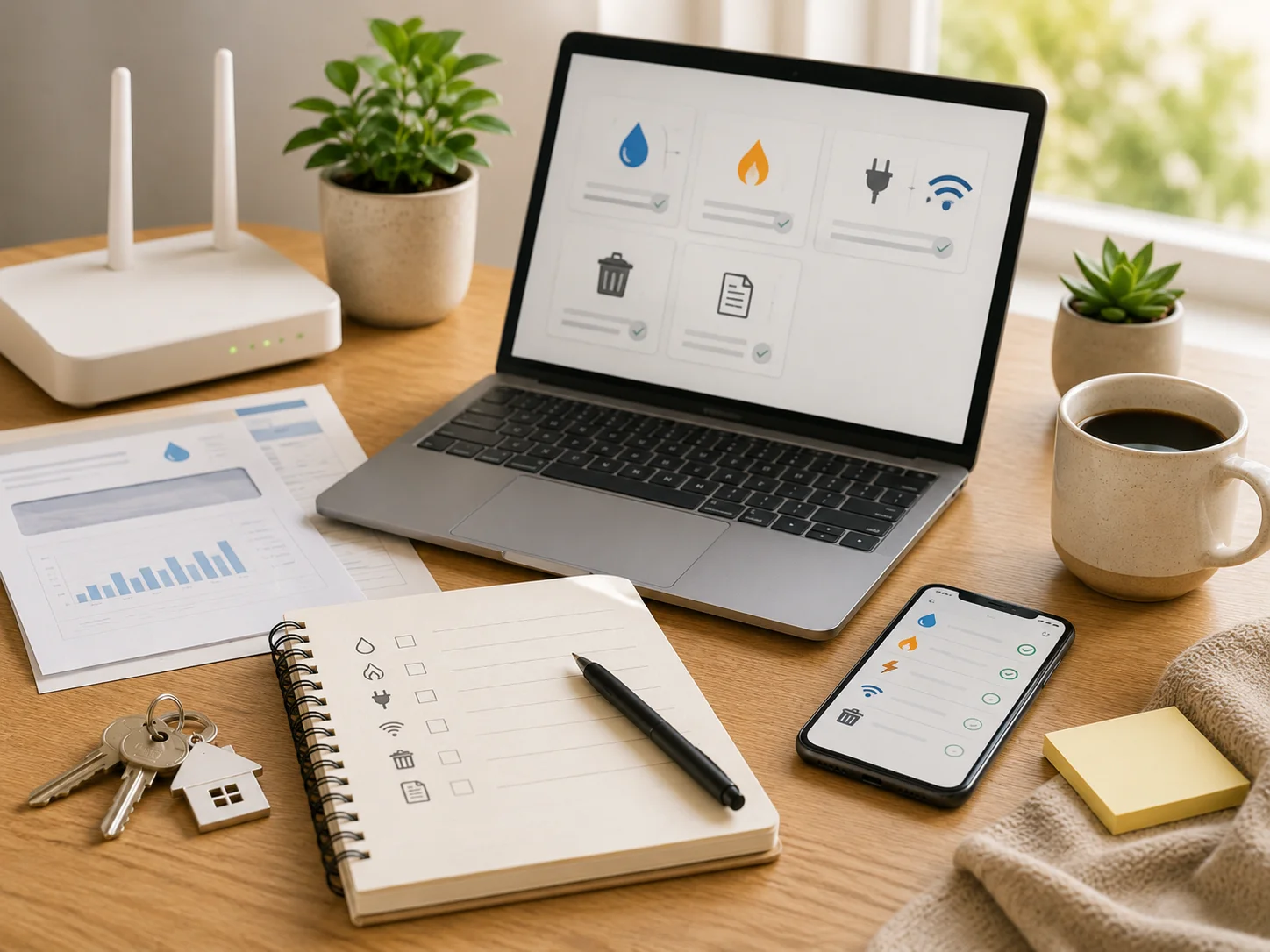


1. Identify every required utility and service
List every service connected to the home: electricity, gas, water, sewer, trash, recycling, internet, security monitoring, fuel oil, propane, septic, well service, lawn service, snow removal, solar panel contract, and HOA-managed services if applicable. Do not assume any service will automatically continue after ownership transfers. Each may require a new account, start date, deposit, or identity verification.
2. Schedule service start dates before closing or move-in
Contact providers before move-in and schedule service to begin on the correct date. For electricity, gas, and water, the start date should typically be closing day. Internet installation needs more lead time — often 1–2 weeks. Confirm all start dates in writing so you are not moving into a home without power, heat, water, or connectivity.
3. Confirm final meter readings and billing responsibility
Ask how final readings are handled for electricity, gas, and water. In some areas, the title company, seller, municipality, or utility provider coordinates final balances. In others, the buyer must contact providers directly. Resolving billing responsibility before closing prevents disputes over charges that belong to the seller or bills that should begin only after ownership transfers.
4. Understand deposits, setup fees, and billing cycles
Some providers require deposits, activation fees, or transfer fees. Ask when the first bill will arrive, whether billing is monthly or quarterly, and whether payments go to the provider directly or through a municipal account. Understanding billing cycles during the first month prevents missed first payments.
5. Confirm internet and essential connectivity early — it takes longest
Internet installation can take significantly longer than other utilities, especially if the home needs new wiring, equipment, or technician access. If you work remotely, have school-age children, use smart home devices, or rely on online systems, internet connectivity is not a convenience — it is a functional requirement for occupancy.
6. Save account numbers and provider contacts in one place
Create a utility record with provider names, account numbers, phone numbers, websites, login credentials, billing dates, and emergency contact numbers. Store this alongside your home documents. When a leak, outage, billing issue, or service interruption happens, you should not be searching email to find the right phone number.
![[background image] image of topdown photo of desk with laptop (for a food and agtech)](https://cdn.prod.website-files.com/69fcbfd51b2bc69ac521880f/6a33dfa5776699afc5a2cd35_7182686e-6068-46b5-b231-80326bc2e7b3.avif)