
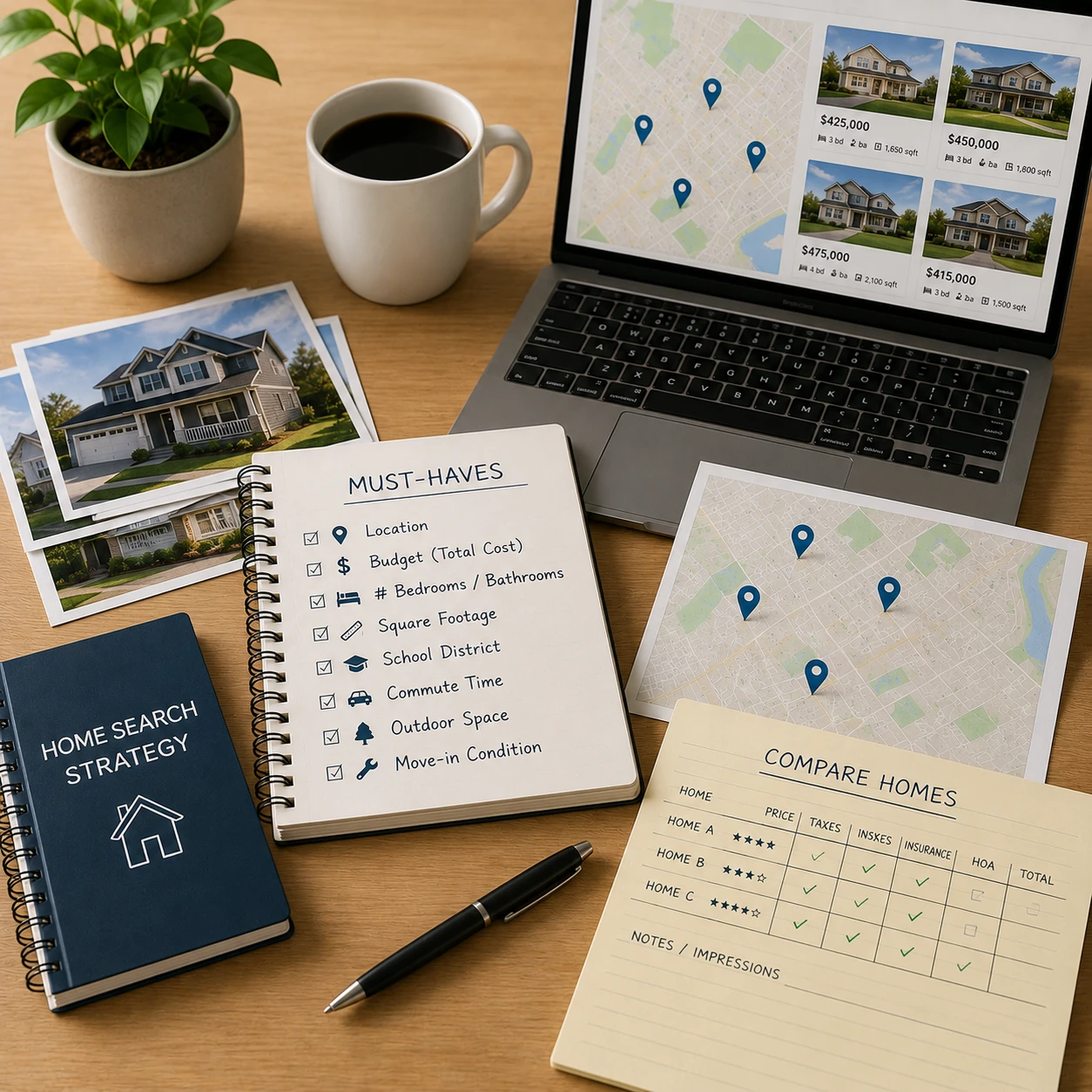


1. Define Must-Haves, Nice-to-Haves, and Deal-Breakers Before Browsing
Write your criteria before you look at listings. Separate what you truly need from what would simply be nice to have. Must-haves may include location, bedroom count, commute limit, school district, accessibility, or monthly cost ceiling. Deal-breakers might include flood risk, high HOA fees, major repairs, or unsafe location. This protects your decision from being reshaped by attractive photos, staging, or emotional pressure.
2. Search by total ownership cost, not listing price
The listing price is only the starting point. Compare homes by full monthly ownership cost, including mortgage payment, property taxes, homeowners insurance, mortgage insurance if applicable, HOA fees, utilities, and estimated maintenance. Two homes with the same purchase price can create very different monthly obligations. A cheaper home can become more expensive if taxes, insurance, repairs, or HOA costs are higher.
3. Research neighborhoods before touring homes
A home can be attractive and still be in the wrong location for your life. Research commute times at realistic hours, noise, traffic, parking, nearby services, school quality where relevant, safety, transit access, and planned development. If possible, visit the area at different times of day. Neighborhood fit affects daily life, future resale, and long-term satisfaction more than many first-time buyers realize.
4. Compare listings to recent comparable sales
Do not treat the asking price as proof of value. Sellers choose asking prices; the market confirms value through recent comparable sales. Before becoming attached to a home, review what similar nearby homes have actually sold for, ideally with similar size, condition, location, and property type. This helps you understand whether the price is reasonable, aggressive, underpriced for competition, or disconnected from market reality.
5. Track homes in a structured shortlist
After several tours, memory becomes unreliable. Use a structured shortlist to track each property’s price, estimated monthly cost, taxes, insurance concerns, condition, location, HOA details, repair risks, resale concerns, and possible offer strategy. This helps you compare homes objectively instead of relying on which one felt best in the moment. A good shortlist turns the search from emotional browsing into a decision process.
6. Understand your local market conditions
National housing headlines are usually too broad to guide a specific purchase. Ask your agent what market conditions look like in your target area right now: average days on market, recent price reductions, multiple-offer activity, seller concessions, inventory level, and how close homes sell to asking price. Competitive, balanced, and buyer-favoring markets require different strategies for timing, negotiation, contingencies, and offer strength.
![[background image] image of topdown photo of desk with laptop (for a food and agtech)](https://cdn.prod.website-files.com/69fcbfd51b2bc69ac521880f/6a33dfa5776699afc5a2cd35_7182686e-6068-46b5-b231-80326bc2e7b3.avif)