
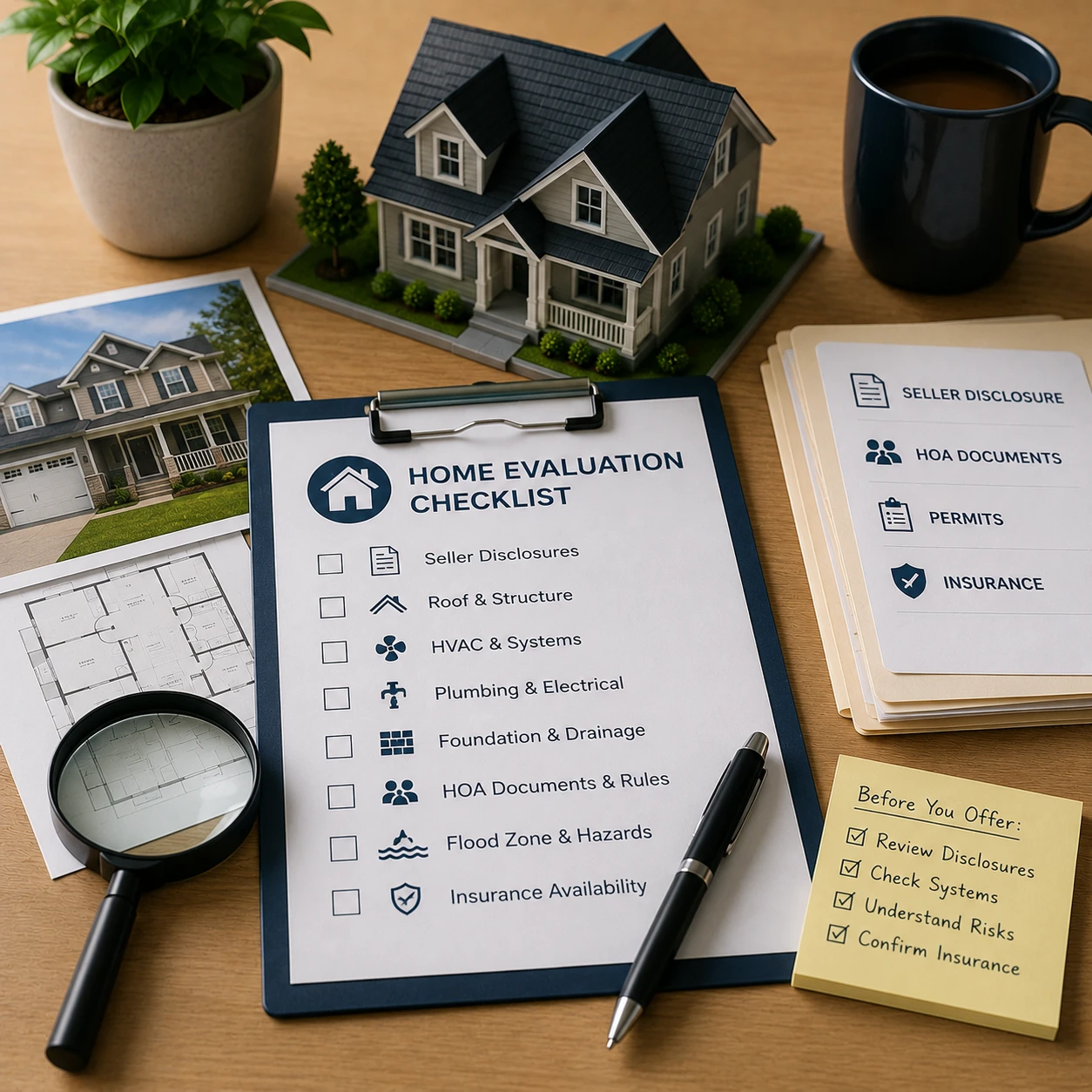


1. Review the seller disclosure before forming an emotional view
Read the seller's disclosure before the listing photos, finishes, or staging shape your opinion of the home. Look for past water damage, roof issues, foundation movement, pest history, insurance claims, fire or flood events, unpermitted work, prior repairs, and known defects. The disclosure does not replace an inspection, but it can reveal risks you should investigate before deciding whether the home is worth an offer.
2. Look beyond cosmetic condition
A home can look updated and still have serious hidden risks. Fresh paint, new flooring, staging, modern fixtures, and attractive photos do not prove that the roof, HVAC, plumbing, electrical system, drainage, or foundation are sound. Treat cosmetic improvements as presentation, not proof of quality. Before offering, separate what makes the home look appealing from what makes it safe, functional, insurable, and financially reasonable to own.
3. Estimate the age and condition of major systems
Major systems drive the largest near-term repair risks. Ask about the age and condition of the roof, HVAC, water heater, electrical panel, plumbing, windows, foundation, and drainage. A system does not need to be broken to create financial exposure; it may simply be near the end of its useful life. Knowing likely replacement timing helps you decide whether the asking price, repair reserve, and offer strategy still make sense.
4. Verify that homeowners insurance is available and affordable
Do not wait until after your offer is accepted to check insurance. Contact an insurance agent or broker before making an offer, especially in areas with flood, wildfire, wind, hail, or older-home risk. Some properties may be expensive to insure, difficult to insure, or require repairs before coverage is available. Insurance affects both mortgage approval and long-term affordability, so it belongs in pre-offer evaluation, not closing-week panic.
5. Review HOA or condo documents if applicable
If the home is part of an HOA, condo association, or co-op, the property risk is not limited to the unit itself. Review dues, reserves, special assessments, insurance coverage, litigation, rental restrictions, maintenance responsibilities, rules, and transfer fees. A low monthly HOA fee is not automatically good if the association is underfunded. Poor HOA finances or restrictive rules can affect affordability, use, financing, and future resale.
6. Ask whether the home fits your budget after likely repairs
A home can be affordable at the purchase price and unaffordable after repairs. Before offering, estimate likely near-term costs for roof, HVAC, plumbing, electrical, appliances, drainage, windows, or safety issues. You do not need perfect numbers at this stage, but you need enough awareness to avoid making an offer based only on the listing price. The right question is not “Can I buy it?” but “Can I own it responsibly?”
![[background image] image of topdown photo of desk with laptop (for a food and agtech)](https://cdn.prod.website-files.com/69fcbfd51b2bc69ac521880f/6a33dfa5776699afc5a2cd35_7182686e-6068-46b5-b231-80326bc2e7b3.avif)