
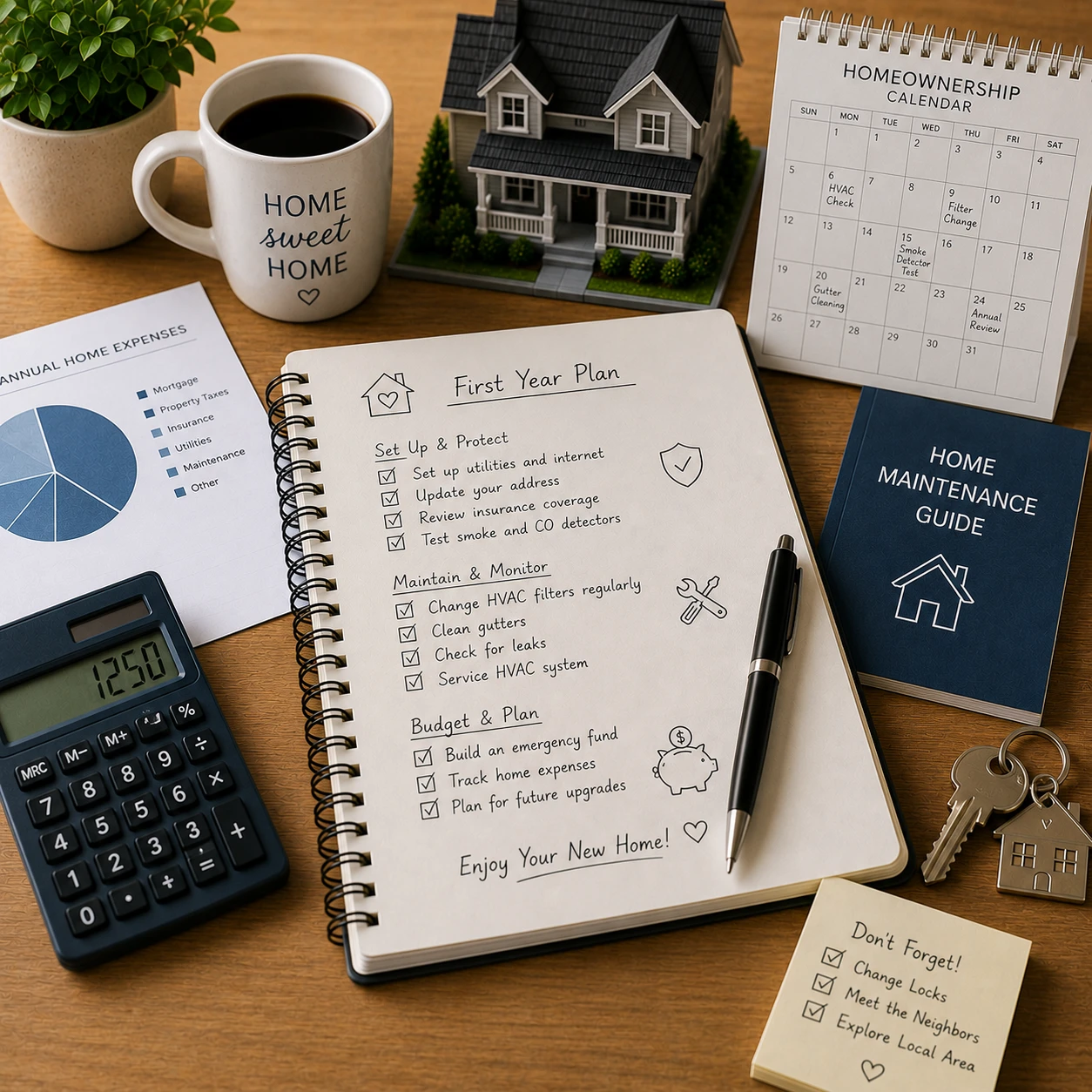


1. Change all locks and access credentials on move-in day
You do not know how many copies of the prior keys exist or who may have them. Prior owners, relatives, contractors, neighbors, agents, cleaners, or property managers may have had access at some point. Change the locks, rekey exterior doors, reset garage codes, update smart lock access, and change any security system credentials. This is a basic ownership step, not an optional upgrade.
2. Set up utilities and essential services before moving in
Confirm electricity, gas, water, internet, trash, sewer, and any local services before move-in day. Do not assume everything will transfer automatically from the seller. On the first day, locate the main electrical panel, water shutoff, gas shutoff, HVAC controls, sump pump if applicable, and any emergency access points. Knowing how to shut systems off quickly can prevent a small issue from becoming an expensive repair.
3. Build a first-year maintenance reserve and fund it monthly
Homeownership creates ongoing repair responsibility from day one. A common starting guideline is to set aside 1–2% of the home’s value per year for maintenance, but the right amount depends on the home’s age, size, condition, systems, climate, and inspection findings. Keep this money in a dedicated account separate from your emergency fund. Furniture can wait. A leaking roof, naturally, will not.
4. Create a home maintenance calendar
Maintenance should be scheduled before something fails, not after. Add reminders for HVAC filter changes, gutter cleaning, smoke and carbon monoxide detector checks, pest control, roof and exterior checks, lawn or drainage care, seasonal weather preparation, and appliance maintenance. Deferred maintenance is usually more expensive than timely maintenance. A simple calendar turns ownership from reaction mode into a manageable routine.
5. Organize all ownership documents
Create a dedicated digital folder for closing documents, inspection reports, seller disclosures, warranties, permits, appliance manuals, insurance policies, title documents, HOA records if applicable, repair invoices, and contractor receipts. These records matter for future refinancing, resale, warranty claims, insurance claims, tax questions, and contractor work. The best time to organize them is immediately after closing, before paperwork starts reproducing in drawers like an invasive species.
6. Understand your property tax and insurance obligations
After closing, your property tax and insurance responsibilities continue to change. Check whether your jurisdiction offers a homestead exemption or other owner-occupancy benefit, and note the filing deadline. Review how your escrow account works, when it is analyzed, and how tax or insurance increases may affect your monthly payment. Know your insurance renewal date, deductible, coverage limits, and whether additional coverage is needed for flood, wind, earthquake, or other local risks.
![[background image] image of topdown photo of desk with laptop (for a food and agtech)](https://cdn.prod.website-files.com/69fcbfd51b2bc69ac521880f/6a33dfa5776699afc5a2cd35_7182686e-6068-46b5-b231-80326bc2e7b3.avif)