

U.S. New Homeowner Maintenance Guide- Stage 4
Ongoing Guide · Last Edited:
July 22, 2026

Maintain HVAC, Filters, and Safety Devices on Schedule

ENERGY STAR recommends 90-day HVAC filter changes. The U.S. Fire Administration recommends monthly smoke alarm tests and 10-year alarm replacement. NFPA recommends annual dryer vent cleaning. These three habits prevent most preventable home emergencies.

Maintain HVAC, Filters, and Safety Devices on Schedule
Fist Home Decisions Guide
Home Decisions Guide

Why This Stage Matters

HVAC, filters, smoke and CO detectors, dryer vents, thermostats, ventilation, and basic comfort systems are easy to ignore because they often work until they suddenly do not. But these systems affect daily comfort, energy bills, safety, indoor air quality, and emergency risk.

This stage focuses on routine system care, not major repairs. The goal is to prevent avoidable failures and know when professional service is needed. Most of the highest-consequence safety failures in the U.S. home come from skipped versions of the tasks in this stage.

Critical Actions You Should Do

1. Check and replace HVAC filters on a defined schedule

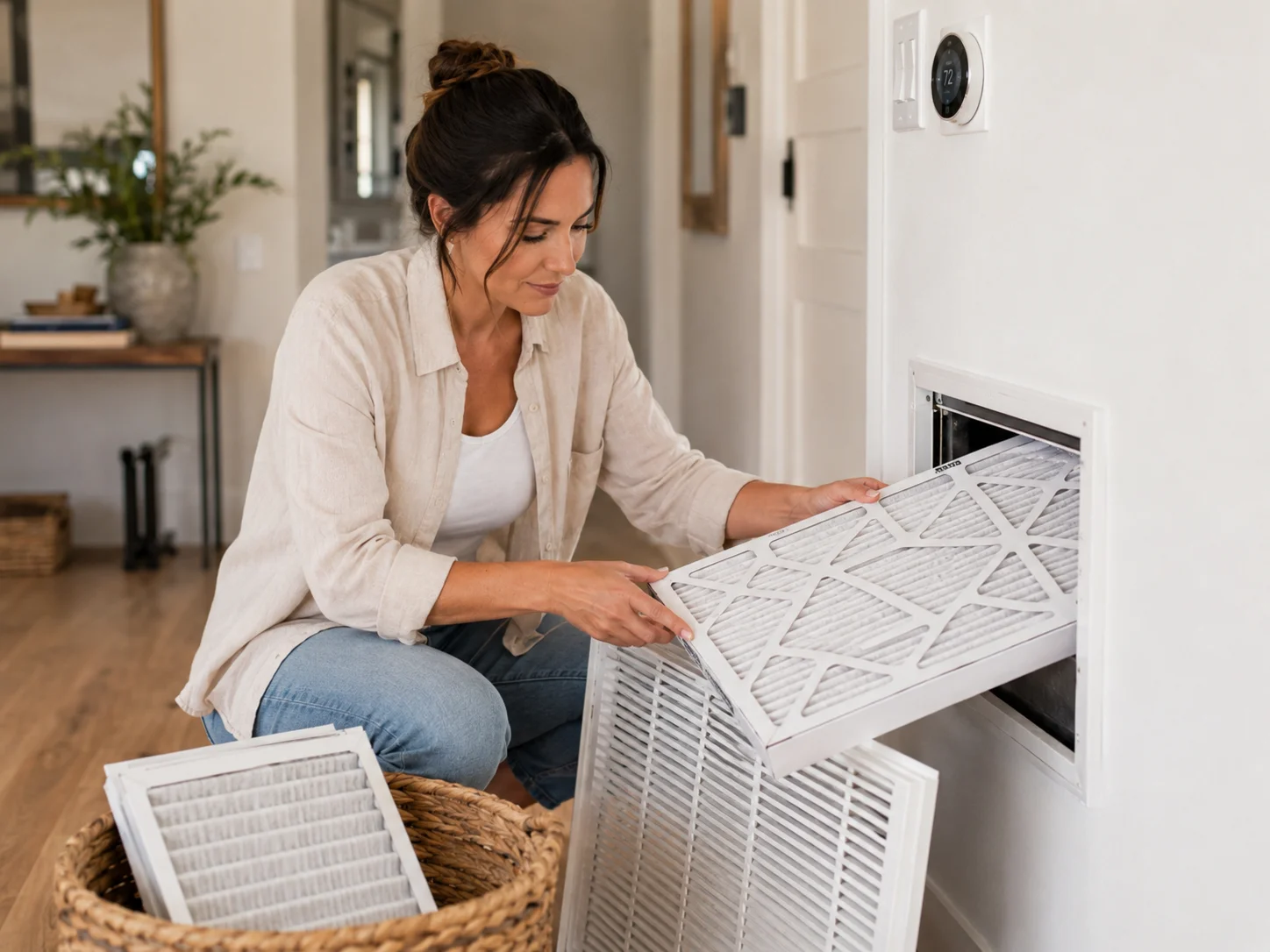
Record filter size, type, and location. Per ENERGY STAR guidance: check monthly during heavy-use months; replace at minimum every 90 days for 1-inch filters. Replace more frequently with pets, high dust, or known allergies. Dirty filters reduce system efficiency and shorten equipment lifespan. Buy filters in 4-packs to remove the friction of running out.

2. Schedule seasonal HVAC service before peak season

Heating service in early fall (September–October); cooling service in early spring (March–April). Professional service before peak season identifies issues before failure during high-demand weather — and avoids the emergency service premium that contractors charge during heat waves and cold snaps.

3. Test smoke and carbon monoxide alarms monthly per U.S. Fire Administration guidance

Press the test button on every alarm monthly. Replace batteries annually or as the chirp signal indicates. Replace the alarm itself every 10 years — the sensor degrades regardless of whether the battery still works. In 16% of U.S. home fire deaths where alarms were present, the alarms failed to operate; 35% of those failures were due to missing or disconnected batteries (NFPA Research 2024). Record test dates and device installation years in the maintenance log.

4. Clean dryer lint trap after every load and clean the dryer vent annually

Clean the lint trap after every load. Schedule professional dryer vent cleaning at least annually — the NFPA standard — and more frequently with heavy household use, long vent runs, pet hair, or warning signs (longer drying times, excessive heat, burning smell, hot exterior dryer surface). Lint buildup accounts for approximately 34% of dryer fires, which cause 5–13 deaths and 100–444 injuries per year in the U.S. (NFPA / U.S. Fire Administration). Annual professional cleaning typically costs $100–$200.

5. Monitor thermostat performance and comfort patterns

Uneven temperatures, short cycling, rising bills, strange noises, and poor airflow can indicate filter issues, duct problems, refrigerant leaks, HVAC service needs, or insulation concerns. Track patterns rather than reacting to single incidents — a one-time hot afternoon is different from a recurring temperature differential.

6. Record appliance and system symptoms early

Small symptoms are easier to diagnose when documented: noise, smells, leaks, error codes, cycling, slow drying, weak airflow, or inconsistent heating and cooling. Take photos or short videos. Contractors diagnose faster from documented patterns than from verbal descriptions.

Extra Actions You Can Do

1. Create a system service log

Track filter changes, technician visits, repairs, parts, costs, warranty status, and recommendations. This connects directly to the Stage 8 documentation system.

2. Learn the difference between maintenance and replacement signals

A dirty filter is maintenance. A repeatedly failing compressor, cracked heat exchanger, or aging water heater approaching its lifespan limit is replacement planning. The distinction matters for budget allocation in Stage 7.

3. Review indoor humidity and ventilation

Humidity affects comfort, mold risk, wood movement, and indoor air quality. Track patterns if the home feels damp, dry, stale, or musty. Target indoor humidity is typically 30–50% (EPA guidance). Consider a hygrometer for $10–$30.

4. Build a trusted HVAC contact before an emergency

Emergency calls during extreme weather can cost 2–3× standard rates. A known service provider with prior history reduces panic decisions and pricing exposure. Identify this contact during routine service, not during failure.

Decision Gate

Important Signs That You Should Consider When You Want to Decide

  • ✓  GO AHEAD

    AND CONTINUE IF

    •  HVAC filter size, location, and schedule recorded.

    •  Smoke and CO alarms tested monthly with installation dates logged.

    •  Dryer lint and annual vent maintenance scheduled.

    •  Comfort system symptoms being tracked.

    •  Trusted HVAC contact identified.

  • ✗  STOP

    AND REASSESS IF

    •  HVAC filter location or size is unknown.

    •  Smoke or CO alarms are untested or older than 10 years.

    •  Dryer takes longer than normal or vent condition is unknown.

    •  System symptoms are recurring without diagnosis.

STAGE DELIVERABLE

Core Systems Maintenance Schedule

A practical schedule for HVAC filters, seasonal service, monthly safety device testing, annual dryer vent care, and comfort-system monitoring.

[background image] image of topdown photo of desk with laptop (for a food and agtech)