
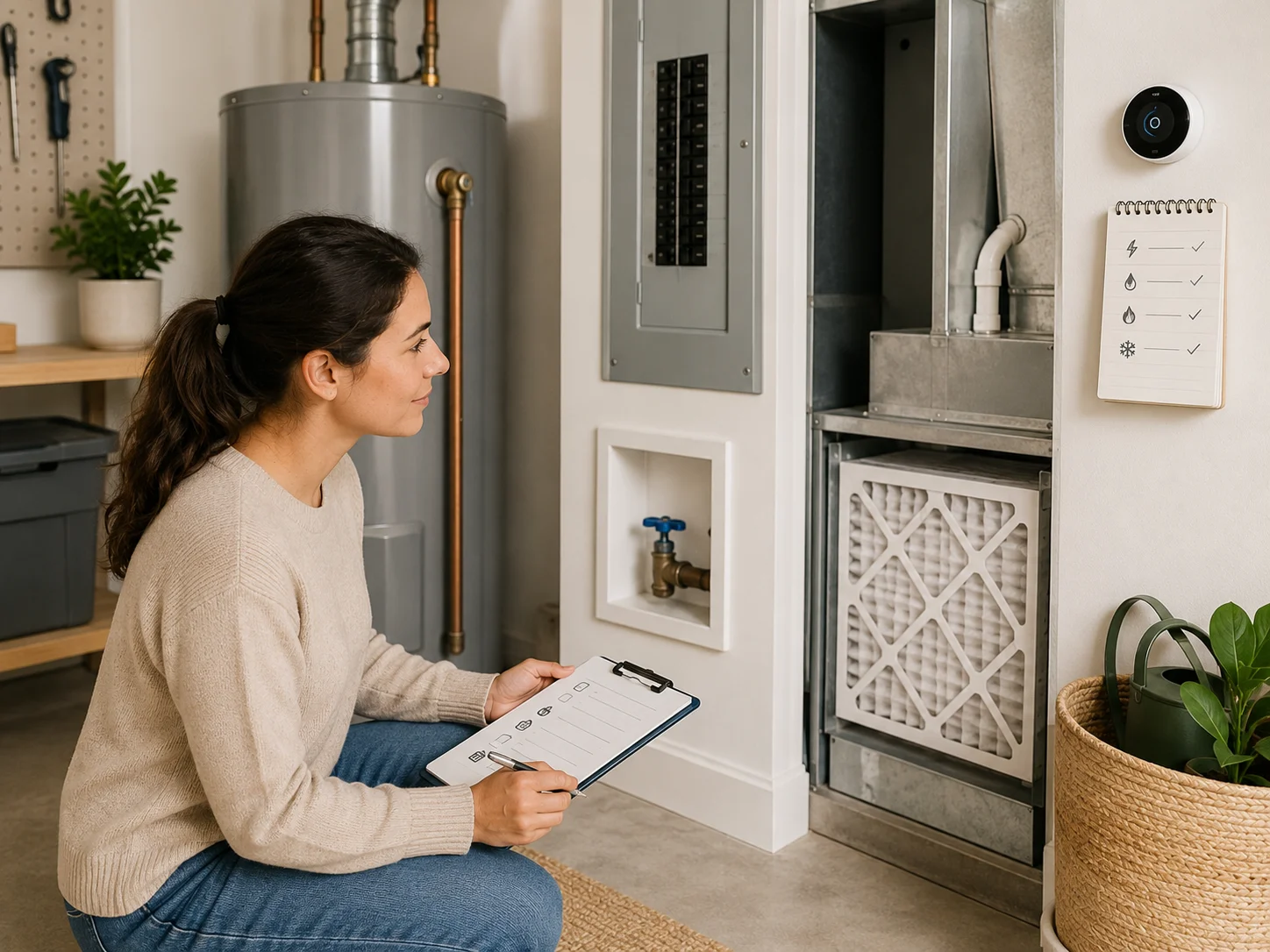


1. Locate the main water shutoff and test that it operates
Find the main water shutoff and confirm it turns freely. In a burst pipe, appliance failure, or plumbing emergency, knowing how to shut off water immediately can prevent damage averaging $13,954 per claim. Do not wait until water is spreading across the floor to search for the valve. Mark the location and make sure everyone in the household knows where it is.
2. Locate the electrical panel, photograph all breaker labels, and note unclear ones
Find the electrical panel and photograph every breaker label immediately — even if some are unclear or missing. This two-minute action creates a permanent reference that prevents future confusion during outages, repairs, or appliance troubleshooting. Unclear labels can be improved over time; a photo prevents starting from scratch. Do not open or modify electrical components beyond your knowledge level.
3. Identify heating, cooling, filter location, and replacement schedule
Locate the HVAC system, thermostat, air filter, supply vents, and return air vents. Check the filter size and the manufacturer’s recommended replacement schedule. HVAC problems affect comfort, air quality, energy cost, and system lifespan. Replacing a filter is simple — but only if you know where it is and what size to buy.
4. Review water heater location, fuel type, and condition
Find the water heater and identify whether it uses gas, electricity, oil, or another fuel. Note its approximate age, service labels, shutoff location, and visible condition. Water heaters over 10–12 years old warrant monitoring. If the home uses propane, oil, or fuel delivery, identify the provider and delivery schedule immediately.
5. Identify sump pump, drainage, and moisture risk areas
Look for sump pumps, basement drains, gutters, downspouts, grading issues, and areas where water may collect or pool. Water is the most common source of non-catastrophic home damage. Understanding where water enters, exits, drains, or becomes a risk prepares you for maintenance and helps prevent early ownership surprises.
6. Create a simple home systems map with photos
Document the location of shutoffs, panels, filters, meters, cleanouts, controls, and service tags with smartphone photos and a brief written note. A simple digital note with photos is enough. The purpose is to make emergency response and future maintenance faster and easier for everyone in the household.
![[background image] image of topdown photo of desk with laptop (for a food and agtech)](https://cdn.prod.website-files.com/69fcbfd51b2bc69ac521880f/6a33dfa5776699afc5a2cd35_7182686e-6068-46b5-b231-80326bc2e7b3.avif)