
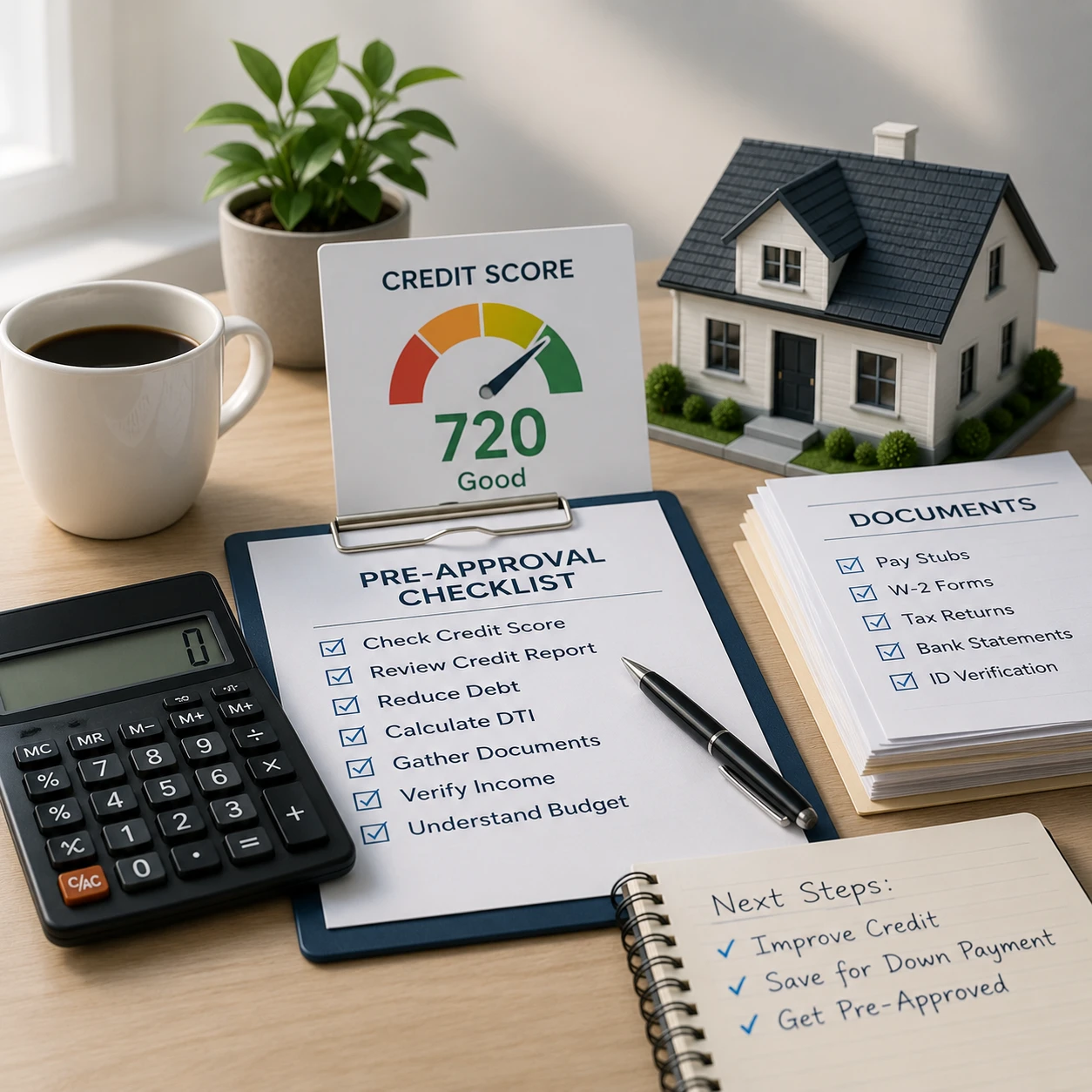


1. Check Your Credit Reports Before Applying
Review your credit reports at AnnualCreditReport.com before speaking seriously with lenders. It is the official source for free U.S. credit reports from Equifax, Experian, and TransUnion. Check all three because they may show different accounts, balances, addresses, or errors. Dispute mistakes early, especially incorrect late payments, collections, balances, or identity issues. Credit report problems are easier to fix before pre-approval than during underwriting.
2. Understand your debt-to-income position
Before a lender calculates your debt-to-income ratio, know it yourself. List every required monthly debt payment, including auto loans, student loans, credit card minimums, personal loans, child support, and other recurring obligations. Lenders use DTI to judge whether your income can support the mortgage plus existing debt. Requirements vary by loan type and lender, so treat DTI as an early warning signal, not just a lender formula.
3. Prepare your mortgage documents before applying
Mortgage approval depends on documentation, not just income. Gather recent pay stubs, W-2s, tax returns, bank statements, government ID, employment history, asset statements, and records for any large deposits or gift funds. If your income is variable, self-employed, commission-based, or recently changed, prepare extra documentation early. A strong document file helps prevent delays, repeated lender requests, and avoidable underwriting stress.
4. Identify approval risks before applying
Do not wait for underwriting to reveal weaknesses in your profile. Recent job changes, self-employment, variable income, thin credit, low credit, high debt, large undocumented deposits, or gift funds can all require extra explanation or documentation. Some issues are manageable if prepared early. The risk is not always denial; sometimes it is a weaker pre-approval, a lower buying range, a slower closing, or unexpected loan conditions.
5. Ask about loan options that fit your situation
Conventional, FHA, VA, USDA, and state assistance programs can differ in down payment, credit flexibility, mortgage insurance, funding fees, property standards, seller perception, and long-term cost. Do not choose a loan only because the upfront requirement looks lower. Ask the lender to explain how each option affects monthly payment, cash-to-close, offer strength, inspection or appraisal requirements, and your total cost over time.
6. Get a pre-approval that reflects your real target payment
The maximum amount a lender approves may be higher than what is safe for your actual life. Ask the lender to model your pre-approval around your target monthly payment, not only the largest loan you can qualify for. Compare that number against your ownership budget from Stage 1. A useful pre-approval should support a stable purchase, not push you toward the top edge of your borrowing capacity.
![[background image] image of topdown photo of desk with laptop (for a food and agtech)](https://cdn.prod.website-files.com/69fcbfd51b2bc69ac521880f/6a33dfa5776699afc5a2cd35_7182686e-6068-46b5-b231-80326bc2e7b3.avif)