


U.S. New Homeowner Setup Guide- Stage 7
Ongoing Guide · Last Edited:
July 22, 2026

Organize Every Document Your Home Will Ever Need

Insurance claims, refinancing, resale, and warranty disputes all require specific documents at unpredictable times. Build the home ownership file in your first month, while the records are fresh.

Organize Every Document Your Home Will Ever Need
Fist Home Decisions Guide
Home Decisions Guide

Why This Stage Matters

Disorganized documents create friction every time they are needed. When something breaks, a claim is filed, a contractor asks for details, or the home is eventually sold, missing records cost time and money that cannot easily be recovered.

Setup is the best moment to build the ownership file. The documents are fresh, the context is clear, and the habit of organized record-keeping is most easily established before the urgency of daily life takes over.

Critical Actions You Should Do

1. Create a dedicated home ownership folder

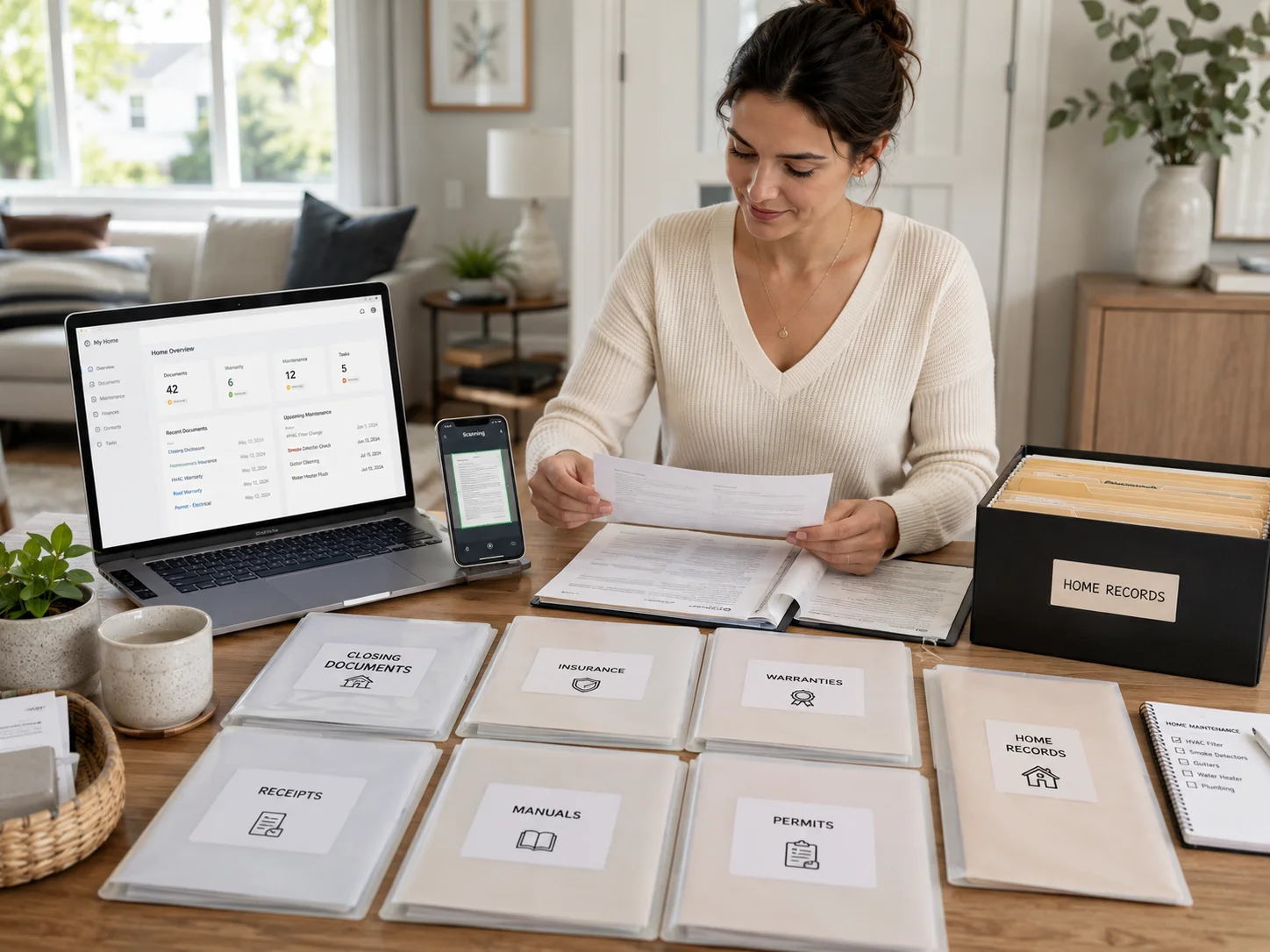
Set up one digital folder and, if useful, one physical folder for all home documents. Organize by category: closing, loan, title, insurance, inspection, warranties, permits, HOA, utilities, contractors, repairs, and taxes. A dedicated folder prevents important records from being scattered across email inboxes, drawers, and download folders.

2. Save closing and loan documents

Keep the Closing Disclosure, settlement statement, promissory note, mortgage documents, escrow information, and loan servicer contact details. These are needed for tax preparation, refinancing, escrow analysis, and future sale. Do not assume the lender or title company will always be easily accessible years later.

3. Save title, deed, and insurance records

Store deed information, title documents, owner’s title insurance policy, and homeowners insurance policy with its declarations page and renewal information. Owner’s title insurance protects you from ownership claims that arise after closing — it is valuable precisely because it may be needed years or decades from now.

4. Organize inspection, disclosure, and repair records

Keep the inspection report, seller disclosures, repair invoices, contractor notes, and any negotiated repair documentation. These records establish a baseline for future maintenance, support warranty claims, and document improvements for resale and insurance purposes.

5. Collect manuals, warranties, and service information

Gather manuals, warranty certificates, appliance model numbers, HVAC service records, roof installation information, and equipment serial numbers. If the seller left documents, digitise them. If not, look up manuals online using model numbers. This saves time when repairs, replacements, or warranty claims arise.

6. Record permits, HOA documents, and local rules

Store HOA bylaws, rules, fee schedules, architectural guidelines, contact information, and portal access credentials. If the property has prior permits or renovation records, save them. These documents affect future repairs, improvements, resale conversations, and compliance.

Extra Actions You Can Do

1. Create a home inventory with photos of major appliances, systems, and valuables

Photograph major appliances, electronics, systems, and valuable items with model and serial numbers where visible. This supports insurance claims and future planning.

2. Upload all documents to a cloud backup immediately

A physical folder that survives the house fire that destroyed its contents is not a backup. Cloud storage with a second copy in a secure location is.

3. Record appliance model and serial numbers in a single reference document

This saves time when ordering parts, scheduling service, or looking up manuals in the future.

4. Record all capital improvements with date and cost from the beginning

Capital improvements — additions, kitchen remodels, HVAC replacement, roof replacement — increase your tax cost basis and reduce taxable gain when you eventually sell.

Decision Gate

Important Signs That You Should Consider When You Want to Decide

  • ✓  GO AHEAD

    AND CONTINUE IF

    •  All ownership, loan, title, insurance, warranty, inspection, and system documents organized in one location.

    •  Digital backup created.

    •  Capital improvements tracking started from day one.

  • ✗  STOP

    AND REASSESS IF

    •  Key documents — Closing Disclosure, deed, title policy, or insurance policy — cannot be located.

STAGE DELIVERABLE

Home Ownership Document Folder

An organized, backed-up system for all closing, loan, title, insurance, inspection, warranty, permit, and HOA documents.

[background image] image of topdown photo of desk with laptop (for a food and agtech)