


U.S. New Homeowner Protect Guide- Stage5
Ongoing Guide · Last Edited:
July 22, 2026

Build Your Emergency Readiness Plan

Weather and climate disasters causing more than $1 billion in damage increased fivefold between 2018 and 2022 compared to the 1980s (U.S. Treasury 2025). Emergency readiness is no longer hypothetical preparation — it is the operational layer for the event that will probably happen.

Build Your Emergency Readiness Plan
Fist Home Decisions Guide
Home Decisions Guide

Why This Stage Matters

A homeowner under emergency stress does not have time to search for shutoff locations, policy numbers, evacuation routes, emergency supplies, pet carriers, medical information, or contractor contacts. Protection works best when the plan exists before the event.

This stage turns emergency preparedness into an operational plan for the home and household — a plan, not a pile of supplies. The Ready.gov ‘Make a Plan’ framework is a useful starting template.

Critical Actions You Should Do

1. Create a household emergency plan with assigned roles

Document who does what during fire, flood, power outage, storm, evacuation, medical emergency, or water event. Include children, elderly family members, pets, and accessibility needs. The Ready.gov 'Make a Plan' template at ready.gov/plan is a useful starting point. A plan nobody can execute is not a plan.

2. Identify evacuation routes and meeting points

Choose two meeting points: one near the home (for fire or local emergency) and one outside the neighborhood (for evacuation). Identify primary and backup evacuation routes. In wildfire and hurricane zones, identify multiple routes — single-route plans fail when the primary is blocked.

3. Build a portable emergency kit

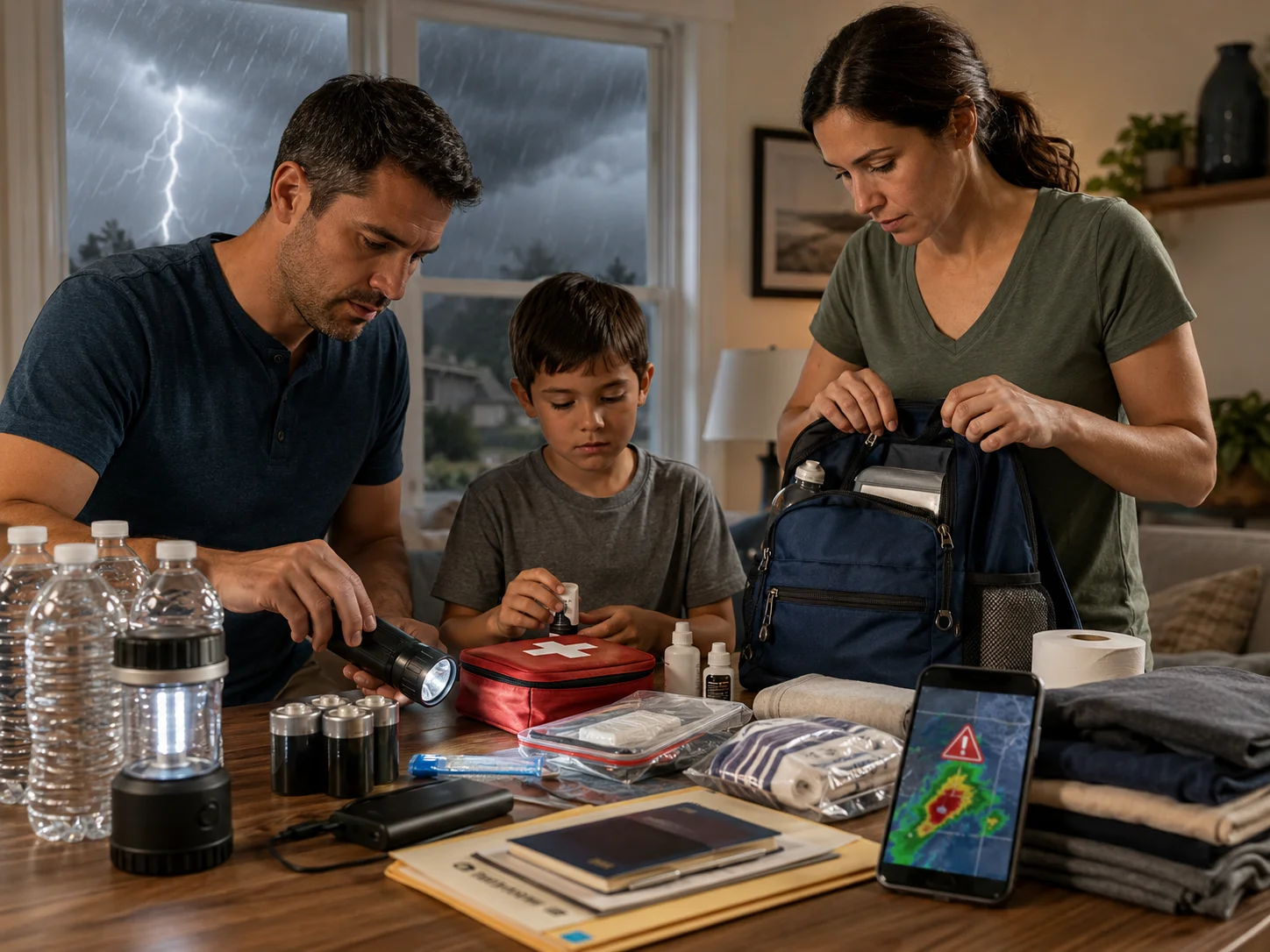
Include water (1 gallon per person per day, 3 days minimum), food, medications, first aid, flashlights, batteries, chargers, documents copy, cash, hygiene items, pet supplies, and essential household-specific needs. American Red Cross publishes detailed kit lists. Store in an accessible location — not the back of a closet where it cannot be reached during an evacuation.

4. Record utility shutoff locations

Document water, gas, electrical panel, sump pump, main breaker, and other emergency shutoffs. Include photos and instructions. The Maintenance guide Stage 4 already mapped these for system orientation — reuse those records here for emergency response.

5. Set up emergency alerts

Use local emergency alerts (sign up at your county emergency management site), weather alerts (NOAA app or local), smoke/CO alerts, water sensors, security notifications, and shake alerts where applicable. Multiple alert channels ensure at least one reaches you during a power or cellular outage.

6. Prepare document access during evacuation

Store digital copies of policy documents, IDs, mortgage contacts, inventory, medical information, pet records, and emergency contacts in secure cloud storage. A 'go folder' on phones for offline access matters when cellular networks are overwhelmed during disasters.

Extra Actions You Can Do

1. Plan for backup power

Homes with sump pumps, medical equipment, remote work needs, refrigerators with medications, or frequent outages may need battery backup (UPS for critical systems), portable power stations ($300–$1,500), or generator planning ($500–$10,000+ installed). Match the solution to the actual need.

2. Create a pet emergency plan

Include carriers, food, medications, vaccination records, microchip information, photos, and pet-friendly shelter options. Many emergency shelters do not accept pets; pre-identify pet-friendly options in your evacuation routes.

3. Create a severe weather checklist tailored to your region

Hurricanes, wildfire smoke, winter storms, tornadoes, heat waves, flooding — each requires different preparation. A generic checklist is less useful than a region-specific one.

4. Practice the plan

Walk through evacuation, shutoff access, alert settings, emergency contacts, and kit location at least annually. A plan written once and never tested usually fails on first use.

Decision Gate

Important Signs That You Should Consider When You Want to Decide

  • ✓  GO AHEAD

    AND CONTINUE IF

    •  Household emergency roles defined.

    •  Evacuation routes and two meeting points identified.

    •  The emergency kit exists and is accessible.

    •  Utility shutoffs documented with photos.

    •  Critical documents backed up to the cloud and a second location.

  • ✗  STOP

    AND REASSESS IF

    •  No one knows what to do during an emergency.

    •  The emergency kit is incomplete or inaccessible.

    •  Shutoff locations are unknown.

    •  Important documents exist only on paper inside the home.

STAGE DELIVERABLE

Home Emergency Readiness Plan

A practical emergency plan covering household roles, evacuation, alerts, supplies, shutoffs, documents, pets, and backup power needs.

[background image] image of topdown photo of desk with laptop (for a food and agtech)